How to remove coffee stains from wool carpet
Published by The Stain Library. How we research our methods.
- DifficultyModerate
- OutlookOften removable
- MaterialWool carpet
- Reviewed6 October 2026
The short answer
Blot wool carpet from the outside in, then use very little cool water on a cloth if the carpet instructions permit it. A compatible approved carpet spotter is optional for remaining coffee; avoid flooding and household laundry powder.
If it has just happened
Press a dry white cloth onto the spill, lift, and repeat with clean sections until transfer slows. Keep pressure vertical and work inwards.
Avoid heat while treating the stain
Avoid adding heat while treating this stain. Follow the material's care instructions and the method below; heat may make a mark harder to remove or damage the material or its finish.
Test on a hidden area first
Use only a cleaner allowed by the material's care instructions. Test it on an inconspicuous area with the same material and finish, or a matching offcut. Let the test area dry and check for changes in colour, texture or finish before treating the visible mark.
Follow the actual care instructions
Avoid household washing-up liquid, biological detergent and alkaline laundry powder. Use plain water first and an approved carpet spotter only if the warranty permits.
What you will need
- Clean white absorbent cloths Change to a dry clean part whenever coffee transfers. Avoid coloured cloths.
- Cool clean water Apply only as the method permits. Do not pour water onto a fitted or porous object.
Helpful but not essential
- 1001 Carpet Stain Remover, 500 ml Optional only after a hidden test and confirmation that the fibre, backing and warranty permit it.
Fresh coffee on wool carpet
Remove as much coffee as possible before considering a cleaner.
Go carefully with cold water
Wool carpet tolerates cold water only within limits. Keep contact time short, work from the edge of the mark inwards and stop if the material changes.
-
Blot the liquid
Use dry white cloths, working from the outer edge towards the centre. Keep switching sections. Do not brush or scrub.
-
Dab with cool water
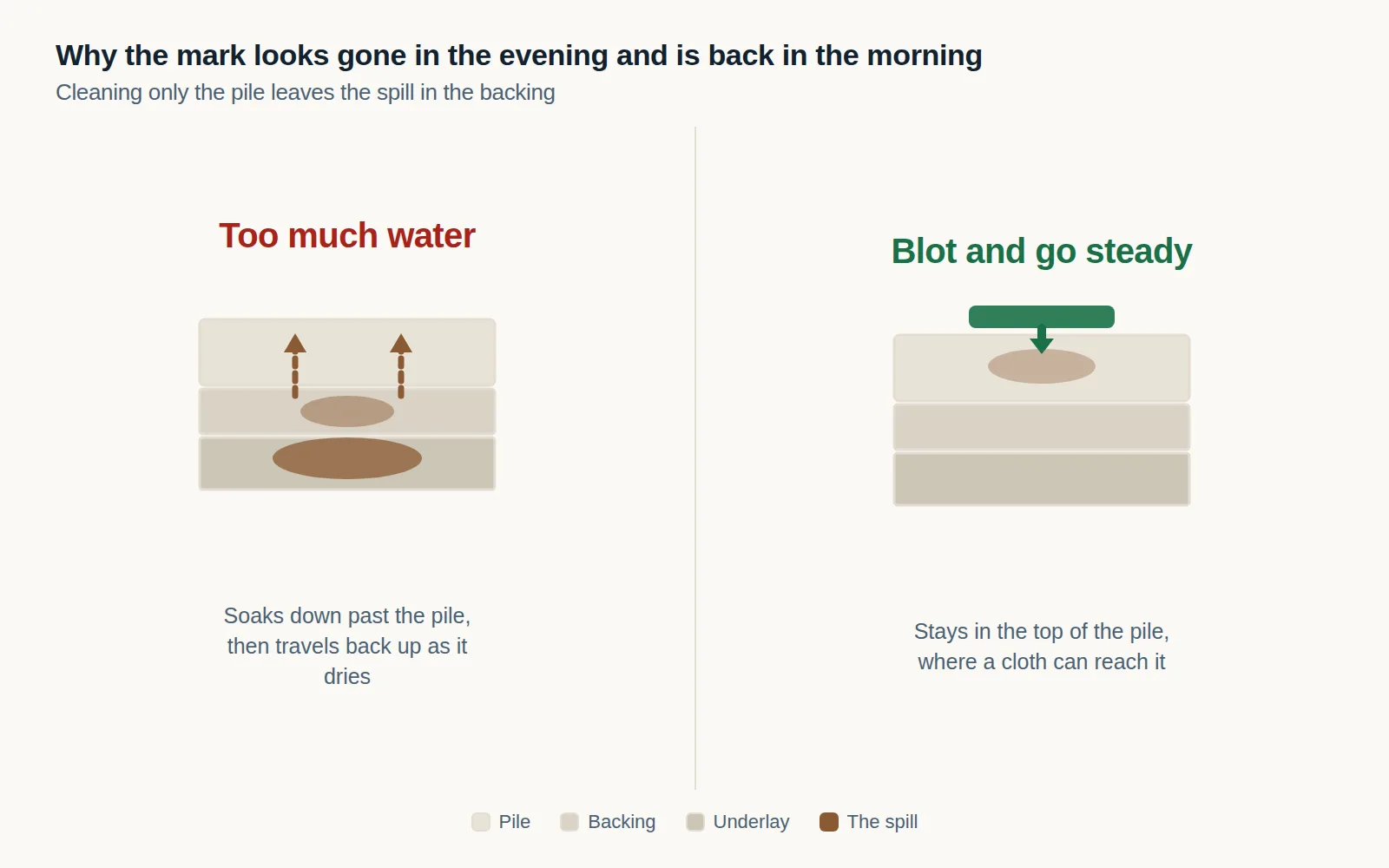
After a dry hidden test, apply a little cool water to a cloth and dab only the pile. Keep the backing and joins dry; never pour water into carpet.
-
Remove moisture and inspect
Blot with dry towels, ventilate and allow complete drying. Leave the area out of use until dry and inspect for a returning ring.
Dried coffee on wool carpet
A small amount of moisture can soften dried residue without wetting the backing.
Go carefully with cold water
Wool carpet tolerates cold water only within limits. Keep contact time short, work from the edge of the mark inwards and stop if the material changes.
-
Soften the pile only
Use a barely damp cloth in short dabs. Do not leave a wet towel on the carpet or soak the base.
-
Use the optional labelled spotter
If plain water stalls, test the exact 1001 product on a hidden area and let it dry. Use its labelled dose and contact time, preferably from a cloth where the carpet maker requires this. Exclude rayon, velvet, brocade and surfaces unsuitable for wet cleaning.
-
Lift residue and dry
Blot away product, then use a separate barely damp clean-water cloth if its instructions require residue removal. Dry-blot and ventilate. Vacuum only once completely dry.
Old or set in coffee on wool carpet
A stubborn brown shadow or returning ring may lie in the backing, reflect old dye change, or require professional stain treatment.
-
Record the spill and earlier treatment
Note whether the coffee was black, milky or sweetened, when it happened and which products or heat have already been used. Keep the item dry and avoid further spot treatments.
-
Arrange the appropriate assessment
Ask a carpet cleaner to identify the fibre and backing and assess the residual stain. A large milky spill or damp underlay needs prompt extraction and controlled drying.
What not to use on wool carpet
-
Flooding, steam and repeated wet passes
Liquid reaching the backing can spread the stain, loosen adhesive or leave a persistent ring.
-
Laundry powder, bleach and household detergent
A laundry treatment is not a carpet spotter; residues, alkali and bleach may damage fibres or dyes.
-
Hard scrubbing
It distorts pile and can leave a permanent texture change.
White compared with coloured wool carpet
Avoid household washing-up liquid, biological detergent and alkaline laundry powder. Use plain water first and an approved carpet spotter only if the warranty permits. Test only a route already allowed by the care instructions, let the hidden test dry, and compare colour, sheen and texture before proceeding.
Products that genuinely help here
Try the household route above first. These are worth buying only when it is not enough.
-
Optional product
1001 Carpet Stain Remover
For a permitted carpet spot treatment
The manufacturer names coffee and WoolSafe approval. This route uses little product after blotting and only on compatible carpet pile and backing.
Worth knowing. Exclude plant fibres, valuable rugs, velvet, brocade, rayon and anything unsuitable for wet cleaning. Test and let the test dry first.
View at Amazon UK Paid link
If the mark is still there
Refer a large spill, wet backing, dye bleed, returning ring, valuable carpet or a shadow after two gentle attempts.
Judge the area only once completely dry. If two controlled attempts make no improvement, do not increase concentration, soak longer or try a mixture. An absorbed stain, changed coating, etched surface, swollen substrate or damaged dye requires assessment and may not be reversible.
When to stop and call someone
Refer a large spill, wet backing, dye bleed, returning ring, valuable carpet or a shadow after two gentle attempts.
Why coffee behaves this way on wool carpet
Avoid household washing-up liquid, biological detergent and alkaline laundry powder. Use plain water first and an approved carpet spotter only if the warranty permits.
Coffee leaves a water-based brown residue as it dries. Milk and sugar add another cleaning problem: a lighter-looking mark can still contain sticky or fatty residue. The method controls liquid and pressure because the finish, fibre and construction determine what can be treated.
These steps combine published material care with coffee-spill guidance. They are a conservative adaptation, rather than evidence of testing this exact combination. Older, absorbed or previously heated marks may remain.
Did this get the mark out?
It tells us which pages to improve first. Nothing about you is recorded.
Thank you. That is logged.
Sources
What we checked and when. Where a manufacturer instruction disagrees with anything here, follow the manufacturer.
-
National Carpet Cleaners Association, spot and stain removal guide
trade body
UK trade body procedure for carpet spills: blot under pressure, work from the outer edge inwards, and use a detergent and vinegar solution for coffee and tea.
Checked 31 August 2026
-
The WoolSafe Organisation, the cleaning and maintenance of wool carpets
trade body
Establishes that wool carpet needs low alkalinity products and no added bleach, that high alkalinity causes colour bleeding, and that spills are blotted rather than rubbed.
Checked 31 August 2026
-
1001 Carpet Care, Carpet Stain Remover instructions
manufacturer
Lists coffee and WoolSafe approval. Requires a hidden test and excludes velvet, brocade, rayon and materials unsuitable for wet cleaning.
Checked 6 October 2026
-
1001 Carpet Stain Remover, WoolSafe approved, Amazon UK listing
retailer
Product page confirming WoolSafe approval, suitability for carpet and upholstery, and that it was in stock and shipped by Amazon at six pounds seventy eight.
Checked 31 August 2026
-
Moreira and colleagues, coffee melanoidins review
publication
Coffee colour includes melanoidins formed during roasting. This is chemistry background, not evidence that any particular cleaner removes a stain.
Checked 6 October 2026