Stain
Ink stains
Contain the spill and match treatment to the pen and the material. Known washable ink may lift with cool water on a compatible surface. Ballpoint, gel and permanent marker need separate decisions and can leave a lasting mark.
- TypeCombination
- Heat sets itSometimes
- Reviewed29 November 2026
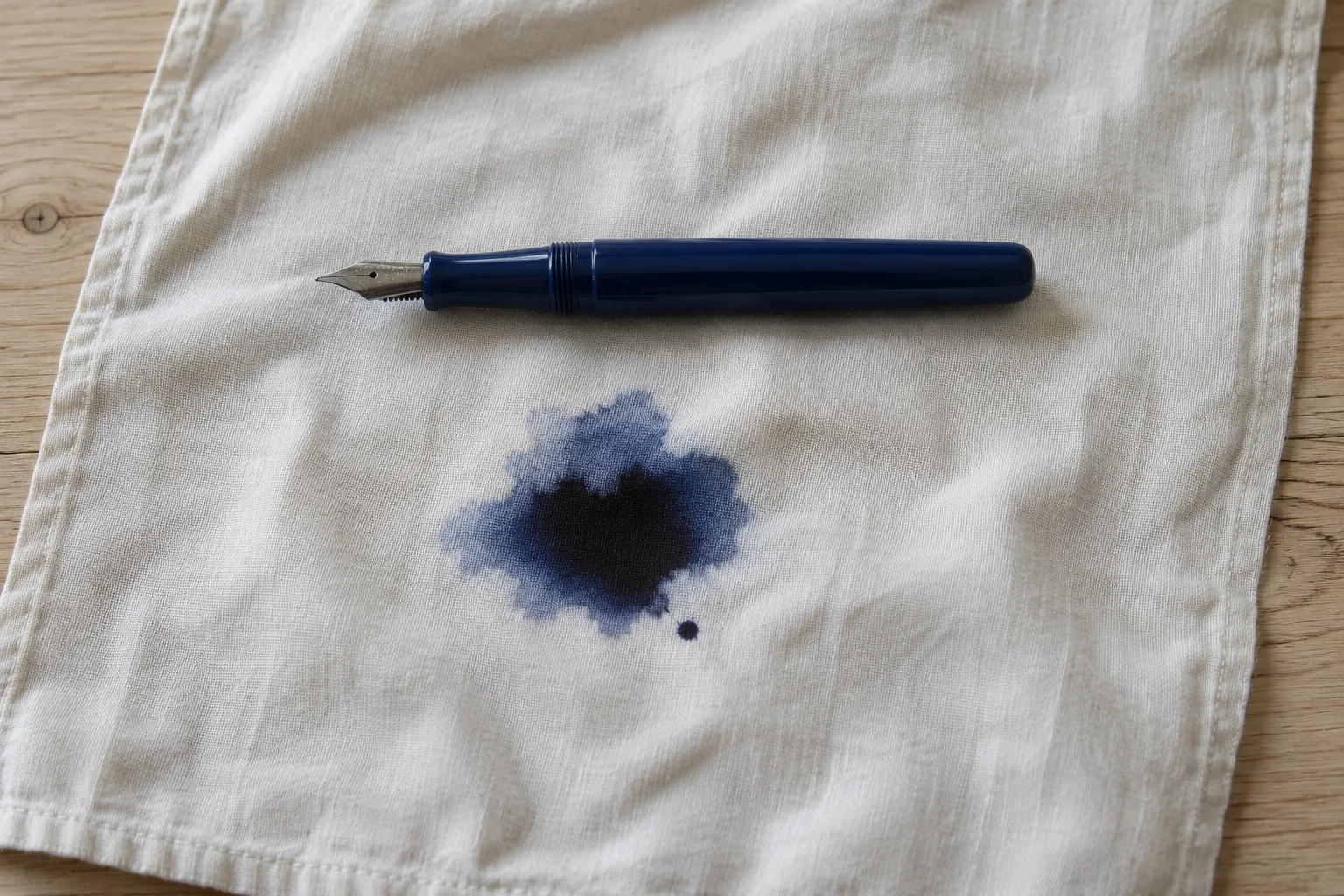
If it has just happened, whatever it is on
Close or move the leaking pen. Separate stained layers so ink cannot transfer. On a sound material that allows contact, blot free liquid with a clean white cloth. Leave fragile originals, unknown textured coatings and stuck image layers untouched.
Do not do this
Avoid rubbing, adding heat, throwing an ink-stained item in a mixed wash, or applying hand gel, hairspray or nail varnish remover to an unidentified surface.
Ink on specific materials
- Acrylic bath Lift loose ink first. On the sound washable face, use a gentle maker-approved wipe with cool water and mild w...
- Acrylic fabric Isolate the stained layer and blot the loose ink. Flush known washable ink from the reverse with cool water i...
- Acrylic sheet Lift loose ink first. On the sound washable face, use a gentle maker-approved wipe with cool water and mild w...
- Alloy wheel Blot free ink on the cool surface. Check the owner handbook before any follow-up wipe or general vehicle clea...
- Aluminium Lift loose ink first. On the sound washable face, use a gentle maker-approved wipe with cool water and mild w...
- Aniline leather Where the surface is firm and permits contact, touch a clean white cloth to standing liquid and lift straight...
- Apron Isolate the stained layer and blot the loose ink. Flush known washable ink from the reverse with cool water i...
- Artex ceiling Leave the coating undisturbed. If the textured finish is old or unidentified, seek competent asbestos advice...
- Artificial grass Pick up wet ink without spreading it. On a confirmed wipeable face, try one small cool-water pass on a known...
- Bamboo flooring Blot loose ink and keep joints dry. Try a barely damp cloth only on a sound finish whose maker allows it.
- Bare plaster Where the surface is firm and permits contact, touch a clean white cloth to standing liquid and lift straight...
- Baseball cap A dry blot is the first step. Try a barely damp blot only for known washable ink on a confirmed washable, col...
- Bed sheets Isolate the stained layer and blot the loose ink. Flush known washable ink from the reverse with cool water i...
- Blanket Isolate the stained layer and blot the loose ink. Flush known washable ink from the reverse with cool water i...
- Block paving Blot without flooding the surface. Use only a maker-approved neutral wipe on a sound face. Embedded ink needs...
- Book pages Keep the area clear and leave the marked face untouched.
- Brass Lift loose ink first. On the sound washable face, use a gentle maker-approved wipe with cool water and mild w...
- Brick Blot without flooding the surface. Use only a maker-approved neutral wipe on a sound face. Embedded ink needs...
- Brushed steel Blot free ink without spreading it. Start with a cool mild wipe for washable ink. For dry permanent marker on...
- Butcher block worktop Take the item out of food use. Lift free ink and clean the sound surface only by the maker’s ordinary method....
- Canvas Isolate the stained layer and blot the loose ink. Flush known washable ink from the reverse with cool water i...
- Canvas print Keep the area clear and leave the marked face untouched.
- Car boot liner Lift loose ink first. On the sound washable face, use a gentle maker-approved wipe with cool water and mild w...
- Car carpet Blot wet ink from the pile without rubbing. A cool damp cloth is only for known washable ink when the carpet...
- Car headliner Where the surface is firm and permits contact, touch a clean white cloth to standing liquid and lift straight...
- Car paintwork Blot free ink on the cool surface. Check the owner handbook before any follow-up wipe or general vehicle clea...
- Card On plain, sound blank material only, lift a standing droplet with one light contact from a clean white cloth....
- Cardboard On plain, sound blank material only, lift a standing droplet with one light contact from a clean white cloth....
- Carpet tiles Blot wet ink from the pile without rubbing. A cool damp cloth is only for known washable ink when the carpet...
- Cashmere A dry blot is the first step. Try a barely damp blot only for known washable ink on a confirmed washable, col...
- Cast iron Lift loose ink first. On the sound washable face, use a gentle maker-approved wipe with cool water and mild w...
- Ceiling Where the surface is firm and permits contact, touch a clean white cloth to standing liquid and lift straight...
- Ceramic basin Lift loose ink first. On the sound washable face, use a gentle maker-approved wipe with cool water and mild w...
- Ceramic sink Lift loose ink first. On the sound washable face, use a gentle maker-approved wipe with cool water and mild w...
- Ceramic tile Lift loose ink first. On the sound washable face, use a gentle maker-approved wipe with cool water and mild w...
- Chenille Blot wet ink without rubbing. Only try a barely damp cloth for known washable ink when the fabric maker permi...
- Chiffon A dry blot is the first step. Try a barely damp blot only for known washable ink on a confirmed washable, col...
- Chopping board Take the item out of food use. Lift free ink and clean the sound surface only by the maker’s ordinary method....
- Chrome Lift loose ink first. On the sound washable face, use a gentle maker-approved wipe with cool water and mild w...
- Composite sink Lift loose ink with a white cloth. Confirm the exact finish before using its approved neutral or routine clea...
- Concrete Blot without flooding the surface. Use only a maker-approved neutral wipe on a sound face. Embedded ink needs...
- Copper Lift loose ink first. On the sound washable face, use a gentle maker-approved wipe with cool water and mild w...
- Corduroy Isolate the stained layer and blot the loose ink. Flush known washable ink from the reverse with cool water i...
- Cork flooring Blot loose ink and keep joints dry. Try a barely damp cloth only on a sound finish whose maker allows it.
- Cotton Isolate the stained layer and blot the loose ink. Flush known washable ink from the reverse with cool water i...
- Coving Where the surface is firm and permits contact, touch a clean white cloth to standing liquid and lift straight...
- Curtains A dry blot is the first step. Try a barely damp blot only for known washable ink on a confirmed washable, col...
- Cushion cover Isolate the stained layer and blot the loose ink. Flush known washable ink from the reverse with cool water i...
- Dashboard plastic Pick up wet ink without spreading it. On a confirmed wipeable face, try one small cool-water pass on a known...
- Denim Isolate the stained layer and blot the loose ink. Flush known washable ink from the reverse with cool water i...
- Dining chair fabric Blot wet ink without rubbing. Only try a barely damp cloth for known washable ink when the fabric maker permi...
- Doormat Blot wet ink from the pile without rubbing. A cool damp cloth is only for known washable ink when the carpet...
- Down filled jacket A dry blot is the first step. Try a barely damp blot only for known washable ink on a confirmed washable, col...
- Duvet cover Isolate the stained layer and blot the loose ink. Flush known washable ink from the reverse with cool water i...
- Elastane A dry blot is the first step. Try a barely damp blot only for known washable ink on a confirmed washable, col...
- Enamel Lift loose ink first. On the sound washable face, use a gentle maker-approved wipe with cool water and mild w...
- Enamel bath Lift loose ink first. On the sound washable face, use a gentle maker-approved wipe with cool water and mild w...
- Engineered wood Blot loose ink and keep joints dry. Try a barely damp cloth only on a sound finish whose maker allows it.
- Extractor hood Switch off and cool the appliance. Only treat a sound accessible face the manual allows you to wipe.
- Fabric blind Where the surface is firm and permits contact, touch a clean white cloth to standing liquid and lift straight...
- Fabric car seat Blot loose ink with a white cloth and follow the vehicle handbook before applying moisture. Keep liquid away...
- Fabric sofa Blot wet ink without rubbing. Only try a barely damp cloth for known washable ink when the fabric maker permi...
- Faux fur A dry blot is the first step. Try a barely damp blot only for known washable ink on a confirmed washable, col...
- Faux leather Pick up wet ink without spreading it. On a confirmed wipeable face, try one small cool-water pass on a known...
- Fence panel Blot loose ink and keep joints dry. Try a barely damp cloth only on a sound finish whose maker allows it.
- Finished leather Blot free ink straight up. A barely damp wipe can lift a small washable mark from intact pigmented leather wh...
- Fleece Isolate the stained layer and blot the loose ink. Flush known washable ink from the reverse with cool water i...
- Foam Where the surface is firm and permits contact, touch a clean white cloth to standing liquid and lift straight...
- Footstool Blot wet ink without rubbing. Only try a barely damp cloth for known washable ink when the fabric maker permi...
- Galvanised steel Lift loose ink first. On the sound washable face, use a gentle maker-approved wipe with cool water and mild w...
- Garden shed Blot loose ink and keep joints dry. Try a barely damp cloth only on a sound finish whose maker allows it.
- Glass Blot free ink without spreading it. Start with a cool mild wipe for washable ink. For dry permanent marker on...
- Glass ceramic hob Switch off and cool the appliance. Only treat a sound accessible face the manual allows you to wipe.
- Gloss painted woodwork Lift free ink and check whether the finish is cured and washable. Try one light damp pass only if the maker p...
- Granite Blot without flooding the surface. Use only a maker-approved neutral wipe on a sound face. Embedded ink needs...
- Gravel Set aside visibly affected loose stones. A small amount of replacement gravel can fix the appearance without...
- Greenhouse glass Lift loose ink first. On the sound washable face, use a gentle maker-approved wipe with cool water and mild w...
- Grout Blot without flooding the surface. Use only a maker-approved neutral wipe on a sound face. Embedded ink needs...
- Headboard Blot wet ink without rubbing. Only try a barely damp cloth for known washable ink when the fabric maker permi...
- Induction hob Switch off and cool the appliance. Only treat a sound accessible face the manual allows you to wipe.
- Ironing board cover A dry blot is the first step. Try a barely damp blot only for known washable ink on a confirmed washable, col...
- Jersey Isolate the stained layer and blot the loose ink. Flush known washable ink from the reverse with cool water i...
- Jute rug Where the surface is firm and permits contact, touch a clean white cloth to standing liquid and lift straight...
- Kettle Switch off and cool the appliance. Only treat a sound accessible face the manual allows you to wipe.
- Lace A dry blot is the first step. Try a barely damp blot only for known washable ink on a confirmed washable, col...
- Laminate flooring Blot loose ink and keep joints dry. Try a barely damp cloth only on a sound finish whose maker allows it.
- Laminate worktop Lift loose ink first. On the sound washable face, use a gentle maker-approved wipe with cool water and mild w...
- Lampshade Where the surface is firm and permits contact, touch a clean white cloth to standing liquid and lift straight...
- Leather bag Blot free ink straight up. A barely damp wipe can lift a small washable mark from intact pigmented leather wh...
- Leather car seat Blot free ink straight up. A barely damp wipe can lift a small washable mark from intact pigmented leather wh...
- Leather jacket Blot free ink straight up. A barely damp wipe can lift a small washable mark from intact pigmented leather wh...
- Leather shoes Blot free ink straight up. A barely damp wipe can lift a small washable mark from intact pigmented leather wh...
- Leather sofa Blot free ink straight up. A barely damp wipe can lift a small washable mark from intact pigmented leather wh...
- Limestone Blot without flooding the surface. Use only a maker-approved neutral wipe on a sound face. Embedded ink needs...
- Linen Isolate the stained layer and blot the loose ink. Flush known washable ink from the reverse with cool water i...
- Linen sofa Blot wet ink without rubbing. Only try a barely damp cloth for known washable ink when the fabric maker permi...
- Linoleum Blot loose ink and keep joints dry. Try a barely damp cloth only on a sound finish whose maker allows it.
- Luxury vinyl tile Blot loose ink and keep joints dry. Try a barely damp cloth only on a sound finish whose maker allows it.
- Marble Blot without flooding the surface. Use only a maker-approved neutral wipe on a sound face. Embedded ink needs...
- Matt emulsion Lift free ink and check whether the finish is cured and washable. Try one light damp pass only if the maker p...
Remove the pen and keep wet ink from reaching other layers. Where it is safe to touch the face, lift excess with a clean white cloth and change to a clean part as soon as it picks up colour. A soft cloth, cool water or a labelled cleaner is useful only when the material and ink suit that route.
Check the pen or refill if you still have it. Start with the material’s care instructions and work by ink type. A washable marker and a waterproof archival gel can both look like a felt-tip line. Ink that responds to one product can be permanent on another surface. Stop if the base colour, texture or sheen changes.
Printer toner, industrial printing inks, tattoos and artist coatings need their own instructions. A large cartridge leak or stain on a valuable original needs dedicated advice. Avoid dryers, irons and hot water while the mark is unresolved.
How ink behaves
Writing inks carry dye, pigment or both. Many fountain and liquid rollerball inks are water-based, many ballpoint inks are oil-based, and some gel and permanent-marker formulations become water-resistant. Heat is used to fix some textile inks, and routine washing or heat can make other marks harder to remove.
Sources
What we checked and when. Where a manufacturer instruction disagrees with anything here, follow the manufacturer.
-
Pilot Europe, ink technology glossary
manufacturer
Distinguishes oil-based ballpoint, water-based liquid ink, dyes and suspended pigments, water-resistant permanent marker and specifically heat-set textile inks. Describes Pilot formulations rather than every pen.
Checked 29 November 2026
-
Sakura, Gelly Roll Moonlight
manufacturer
Some archival gel colours use waterproof pigments. Gel ink should not be assumed to wash out merely because it is delivered in a gel.
Checked 29 November 2026
-
University of Georgia Extension, removing several kinds of ink
authority
Distinguishes ink types and substrates, favours prompt work and cautions that laundering can set some inks. Recommends avoiding rubbing on carpet and warns that permanent ink may stay. Its stronger mixtures are outside these household routes.
Checked 29 November 2026
-
University of Kentucky Extension, stain removal for washable fabrics
authority
Lists ballpoint, felt-tip and liquid ink separately, advises starting with the least destructive approach and cautions that some ink is permanent or can be set by laundering.
Checked 29 November 2026
-
Sharpie, ink stain advice and FAQs
manufacturer
Notes variable removability, distinguishes surfaces and names Amodex as an option for its permanent ink. Recommends a white transfer pad behind an appropriate textile.
Checked 29 November 2026
-
Carpet and Rug Institute, marking ink spot guide
trade body
Recommends acting quickly, absorbing with a dry white cloth, pre-testing, and taking up colour from edge to centre without rubbing.
Checked 29 November 2026