Stain
Motor oil stains
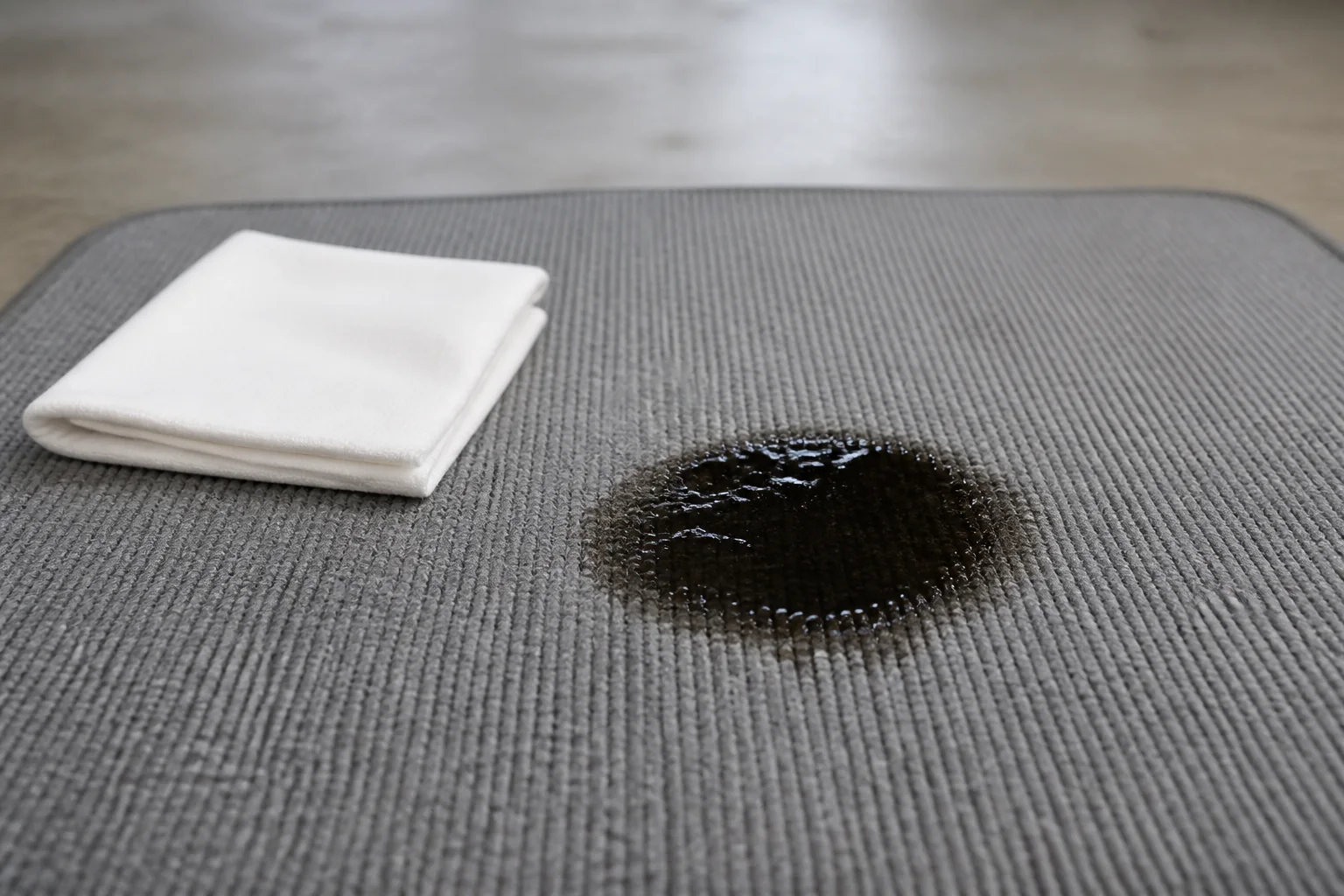
A hydrocarbon base-oil stain with performance additives and, when used, dark suspended engine contamination. Absorb the mobile oil first, then use a material-compatible surfactant or labelled specialist product.
- TypeOil based
- Heat sets itSometimes
- Reviewed2 September 2026
If it has just happened, whatever it is on
Put on nitrile gloves, contain the spill and blot straight down with plain white absorbent material. Add dry absorbent granules or powder on a compatible surface. Do not rub, heat, use an unlabelled solvent or rinse motor oil into drainage.
Do not do this
Do not handle used engine oil with bare hands, keep oily rags in clothing, use petrol or brake cleaner, mix cleaning chemicals, use an ignition source nearby, tumble dry a marked textile, or hose oily residue into a drain.
Motor oil on specific materials
- Acrylic fabric Blot motor oil from Acrylic Fabric, absorb the residue, pretreat both sides with a little washing-up liquid,...
- Acrylic sheet Blot motor oil from Acrylic Sheet, absorb as much as possible, then use a small amount of diluted washing-up...
- Aniline leather Blot motor oil from Aniline Leather and identify the leather. Use a tested leather degreaser only on a compat...
- Apron Blot motor oil from Apron, absorb the residue, pretreat both sides with a little washing-up liquid, wash to t...
- Artificial grass Blot motor oil from Artificial Grass, absorb as much as possible, then use a small amount of diluted washing-...
- Bamboo flooring Blot motor oil from Bamboo Flooring, absorb as much as possible, then use a small amount of diluted washing-u...
- Bare plaster Blot and absorb motor oil from Bare Plaster without adding liquid. Water, solvent or pressure can enlarge the...
- Baseball cap Blot motor oil from Baseball Cap, absorb the residue, pretreat both sides with a little washing-up liquid, wa...
- Bed sheets Blot motor oil from Bed Sheets, absorb the residue, pretreat both sides with a little washing-up liquid, wash...
- Blanket Blot motor oil from Blanket, absorb the residue, pretreat both sides with a little washing-up liquid, wash to...
- Block paving Contain motor oil on Block Paving, absorb it before washing, keep run-off out of drains and use only a compat...
- Book pages Blot and absorb motor oil from Book Pages without adding liquid. Water, solvent or pressure can enlarge the d...
- Brick Contain motor oil on Brick, absorb it before washing, keep run-off out of drains and use only a compatible la...
- Butcher block worktop Blot and absorb motor oil from Butcher Block Worktop without adding liquid. Water, solvent or pressure can en...
- Canvas Blot motor oil from Canvas, absorb the residue, pretreat both sides with a little washing-up liquid, wash to...
- Canvas print Blot and absorb motor oil from Canvas Print without adding liquid. Water, solvent or pressure can enlarge the...
- Car boot liner Blot motor oil from Car Boot Liner, absorb as much as possible, then use a small amount of diluted washing-up...
- Car carpet Blot motor oil from Car Carpet, absorb as much as possible, then use a small amount of diluted washing-up liq...
- Car headliner Blot motor oil from Car Headliner, absorb as much as possible, then use a small amount of diluted washing-up...
- Card Blot and absorb motor oil from Card without adding liquid. Water, solvent or pressure can enlarge the damage,...
- Cardboard Blot and absorb motor oil from Cardboard without adding liquid. Water, solvent or pressure can enlarge the da...
- Carpet tiles Blot motor oil from Carpet Tiles, absorb as much as possible, then use a small amount of diluted washing-up l...
- Cashmere Blot motor oil from Cashmere, absorb as much as possible, then use a small amount of diluted washing-up liqui...
- Ceramic tile Blot motor oil from Ceramic Tile, absorb as much as possible, then use a small amount of diluted washing-up l...
- Chenille Blot motor oil from Chenille, absorb as much as possible, then use a small amount of diluted washing-up liqui...
- Chiffon Blot motor oil from Chiffon, absorb as much as possible, then use a small amount of diluted washing-up liquid...
- Chopping board Blot motor oil from Chopping Board, absorb as much as possible, then use a small amount of diluted washing-up...
- Composite sink Blot motor oil from Composite Sink, absorb as much as possible, then use a small amount of diluted washing-up...
- Concrete Blot motor oil from Concrete, absorb surface oil, wash gently with mild detergent and judge when dry. A remai...
- Corduroy Blot motor oil from Corduroy, absorb the residue, pretreat both sides with a little washing-up liquid, wash t...
- Cork flooring Blot motor oil from Cork Flooring, absorb as much as possible, then use a small amount of diluted washing-up...
- Cotton Blot motor oil from Cotton, absorb the residue, pretreat both sides with a little washing-up liquid, wash to...
- Curtains Blot motor oil from Curtains, absorb the residue, pretreat both sides with a little washing-up liquid, wash t...
- Cushion cover Blot motor oil from Cushion Cover, absorb the residue, pretreat both sides with a little washing-up liquid, w...
- Dashboard plastic Blot motor oil from Dashboard Plastic, absorb as much as possible, then use a small amount of diluted washing...
- Denim Blot motor oil from Denim, absorb the residue, pretreat both sides with a little washing-up liquid, wash to t...
- Dining chair fabric Blot motor oil from Dining Chair Fabric, absorb as much as possible, then use a small amount of diluted washi...
- Doormat Blot motor oil from Doormat, absorb as much as possible, then use a small amount of diluted washing-up liquid...
- Down filled jacket Blot motor oil from Down Filled Jacket, absorb as much as possible, then use a small amount of diluted washin...
- Duvet cover Blot motor oil from Duvet Cover, absorb the residue, pretreat both sides with a little washing-up liquid, was...
- Elastane Blot motor oil from Elastane, absorb the residue, pretreat both sides with a little washing-up liquid, wash t...
- Engineered wood Blot motor oil from Engineered Wood, absorb as much as possible, then use a small amount of diluted washing-u...
- Fabric blind Blot motor oil from Fabric Blind, absorb the residue, pretreat both sides with a little washing-up liquid, wa...
- Fabric car seat Blot motor oil from Fabric Car Seat, absorb as much as possible, then use a small amount of diluted washing-u...
- Fabric sofa Blot motor oil from Fabric Sofa, absorb as much as possible, then use a small amount of diluted washing-up li...
- Faux fur Blot motor oil from Faux Fur, absorb as much as possible, then use a small amount of diluted washing-up liqui...
- Faux leather Blot motor oil from Faux Leather, absorb as much as possible, then use a small amount of diluted washing-up l...
- Fence panel Blot motor oil from Fence Panel, absorb as much as possible, then use a small amount of diluted washing-up li...
- Finished leather Blot motor oil from Finished Leather and identify the leather. Use a tested leather degreaser only on a compa...
- Fleece Blot motor oil from Fleece, absorb the residue, pretreat both sides with a little washing-up liquid, wash to...
- Foam Blot motor oil from Foam, absorb as much as possible, then use a small amount of diluted washing-up liquid on...
- Footstool Blot motor oil from Footstool, absorb as much as possible, then use a small amount of diluted washing-up liqu...
- Garden shed Blot motor oil from Garden Shed, absorb as much as possible, then use a small amount of diluted washing-up li...
- Gloss painted woodwork Blot motor oil from Gloss Painted Woodwork, absorb as much as possible, then use a small amount of diluted wa...
- Granite Blot motor oil from Granite, absorb surface oil, wash gently with mild detergent and judge when dry. A remain...
- Grout Blot motor oil from Grout, absorb surface oil, wash gently with mild detergent and judge when dry. A remainin...
- Headboard Blot motor oil from Headboard, absorb as much as possible, then use a small amount of diluted washing-up liqu...
- Ironing board cover Blot motor oil from Ironing Board Cover, absorb the residue, pretreat both sides with a little washing-up liq...
- Jersey Blot motor oil from Jersey, absorb the residue, pretreat both sides with a little washing-up liquid, wash to...
- Jute rug Blot and absorb motor oil from Jute Rug without adding liquid. Water, solvent or pressure can enlarge the dam...
- Lace Blot motor oil from Lace, absorb as much as possible, then use a small amount of diluted washing-up liquid on...
- Laminate flooring Blot motor oil from Laminate Flooring, absorb as much as possible, then use a small amount of diluted washing...
- Laminate worktop Blot motor oil from Laminate Worktop, absorb as much as possible, then use a small amount of diluted washing-...
- Lampshade Blot and absorb motor oil from Lampshade without adding liquid. Water, solvent or pressure can enlarge the da...
- Leather bag Blot motor oil from Leather Bag and identify the leather. Use a tested leather degreaser only on a compatible...
- Leather car seat Blot motor oil from Leather Car Seat and identify the leather. Use a tested leather degreaser only on a compa...
- Leather jacket Blot motor oil from Leather Jacket and identify the leather. Use a tested leather degreaser only on a compati...
- Leather shoes Blot motor oil from Leather Shoes and identify the leather. Use a tested leather degreaser only on a compatib...
- Leather sofa Blot motor oil from Leather Sofa and identify the leather. Use a tested leather degreaser only on a compatibl...
- Limestone Blot motor oil from Limestone, absorb surface oil, wash gently with mild detergent and judge when dry. A rema...
- Linen Blot motor oil from Linen, absorb the residue, pretreat both sides with a little washing-up liquid, wash to t...
- Linen sofa Blot motor oil from Linen Sofa, absorb as much as possible, then use a small amount of diluted washing-up liq...
- Linoleum Blot motor oil from Linoleum, absorb as much as possible, then use a small amount of diluted washing-up liqui...
- Luxury vinyl tile Blot motor oil from Luxury Vinyl Tile, absorb as much as possible, then use a small amount of diluted washing...
- Marble Blot motor oil from Marble, absorb surface oil, wash gently with mild detergent and judge when dry. A remaini...
- Matt emulsion Blot and absorb motor oil from Matt Emulsion without adding liquid. Water, solvent or pressure can enlarge th...
- Mattress Blot motor oil from Mattress, absorb as much as possible, then use a small amount of diluted washing-up liqui...
- Mattress topper Blot motor oil from Mattress Topper, absorb as much as possible, then use a small amount of diluted washing-u...
- MDF Blot and absorb motor oil from Mdf without adding liquid. Water, solvent or pressure can enlarge the damage,...
- Melamine Blot motor oil from Melamine, absorb as much as possible, then use a small amount of diluted washing-up liqui...
- Merino wool Blot motor oil from Merino Wool, absorb as much as possible, then use a small amount of diluted washing-up li...
- Microfibre sofa Blot motor oil from Microfibre Sofa, absorb as much as possible, then use a small amount of diluted washing-u...
- Mosaic tile Blot motor oil from Mosaic Tile, absorb as much as possible, then use a small amount of diluted washing-up li...
- Nubuck Blot and absorb motor oil from Nubuck without adding liquid. Water, solvent or pressure can enlarge the damag...
- Nylon Blot motor oil from Nylon, absorb the residue, pretreat both sides with a little washing-up liquid, wash to t...
- Nylon carpet Blot motor oil from Nylon Carpet, absorb as much as possible, then use a small amount of diluted washing-up l...
- Office chair Blot motor oil from Office Chair, absorb as much as possible, then use a small amount of diluted washing-up l...
- Oiled wood Blot motor oil from Oiled Wood, absorb as much as possible, then use a small amount of diluted washing-up liq...
- Painted metal Blot motor oil from Painted Metal, absorb as much as possible, then use a small amount of diluted washing-up...
- Painted wood Blot motor oil from Painted Wood, absorb as much as possible, then use a small amount of diluted washing-up l...
- Paper Blot and absorb motor oil from Paper without adding liquid. Water, solvent or pressure can enlarge the damage...
- Parasol fabric Blot motor oil from Parasol Fabric, absorb as much as possible, then use a small amount of diluted washing-up...
- Parquet Blot motor oil from Parquet, absorb as much as possible, then use a small amount of diluted washing-up liquid...
- Patent leather Blot motor oil from Patent Leather, absorb as much as possible, then use a small amount of diluted washing-up...
- Patio slabs Contain motor oil on Patio Slabs, absorb it before washing, keep run-off out of drains and use only a compati...
- Pebbledash Blot and absorb motor oil from Pebbledash without adding liquid. Water, solvent or pressure can enlarge the d...
- Persian rug Blot motor oil from Persian Rug, absorb as much as possible, then use a small amount of diluted washing-up li...
- Photograph Blot and absorb motor oil from Photograph without adding liquid. Water, solvent or pressure can enlarge the d...
- Pillow Blot motor oil from Pillow, absorb as much as possible, then use a small amount of diluted washing-up liquid...
- Pillowcase Blot motor oil from Pillowcase, absorb the residue, pretreat both sides with a little washing-up liquid, wash...
Motor oil is designed to cling, flow and keep contaminants suspended. The base oil creates the spreading translucent ring, while additives and the soot or oxidation residue in used oil can leave a darker centre. Removing the oily feel does not prove that every visible contaminant has gone.
The first minute
Keep people and pets away, wear nitrile gloves and contain the spill. Press absorbent material straight down and change it often. Wiping is the main avoidable mistake because it turns a small concentrated spill into a larger thin film.
Treat unknown oil as used oil
HSE advises avoiding unnecessary skin contact with used engine oil because repeated or prolonged contact can cause dermatitis and other skin disorders. Keep oily absorbent waste contained and away from flame, heat and drains.
Absorb before adding water
A surfactant can help release the film only after free oil has been removed. On porous stone, leather, carpet, paper, render and unfinished wood, liquid can spread oil further or damage the material before it cleans anything.
How motor oil behaves
Motor oil is mainly hydrocarbon base oil plus detergents, dispersants, anti-wear agents, antioxidants and viscosity modifiers. Used oil can also suspend soot, oxidation products and other engine contaminants. The mobile oil spreads through fibres and pores, while the dark contamination can remain after the oily feel has gone.
Sources
What we checked and when. Where a manufacturer instruction disagrees with anything here, follow the manufacturer.
-
Pennzoil explanation of motor oil composition
manufacturer
Motor oil manufacturer explanation establishing that engine oil is mainly base oil with detergents, dispersants, anti-wear agents, antioxidants, friction modifiers and viscosity modifiers, and that used oil suspends combustion contaminants.
Checked 2 September 2026
-
HSE guidance on used engine oil
authority
UK safety authority guidance establishing that repeated or prolonged skin contact with used engine oil can cause dermatitis and other skin disorders, and recommending avoidance of contact, suitable protective clothing and nitrile gloves.
Checked 2 September 2026
-
American Cleaning Institute grease and oil stain guidance
trade body
Cleaning trade body guidance to pretreat grease and oil with prewash stain remover or liquid laundry detergent, launder at a fabric-safe temperature, and repeat before using a tumble dryer if the mark remains.
Checked 2 September 2026
-
Dr. Beckmann Stain Devils Lubricants and Oils
manufacturer
Manufacturer directions specifically list motor oil, explain that solvents and surfactants dissolve lubricant stains, specify a 10 to 15 minute contact time, require a colourfastness test, and exclude leather, suede, carpets, upholstery, wool, silk, acetate and rayon.
Checked 2 September 2026
-
Natural Stone Institute stain removal guidance
trade body
Stone trade body guidance establishes that oil darkens porous stone, immediate spills should be blotted rather than wiped, mild soap may remove surface oil, and deep marks may need a poultice or professional treatment.
Checked 2 September 2026