Stain
Cooking grease stains
An oil-based food stain made mainly of triglycerides, sometimes with sauce pigment or protein. Lift solids, absorb the mobile oil, then use a material-compatible surfactant and keep heat away until the mark has gone.
- TypeOil based
- Heat sets itSometimes
- Reviewed2 September 2026
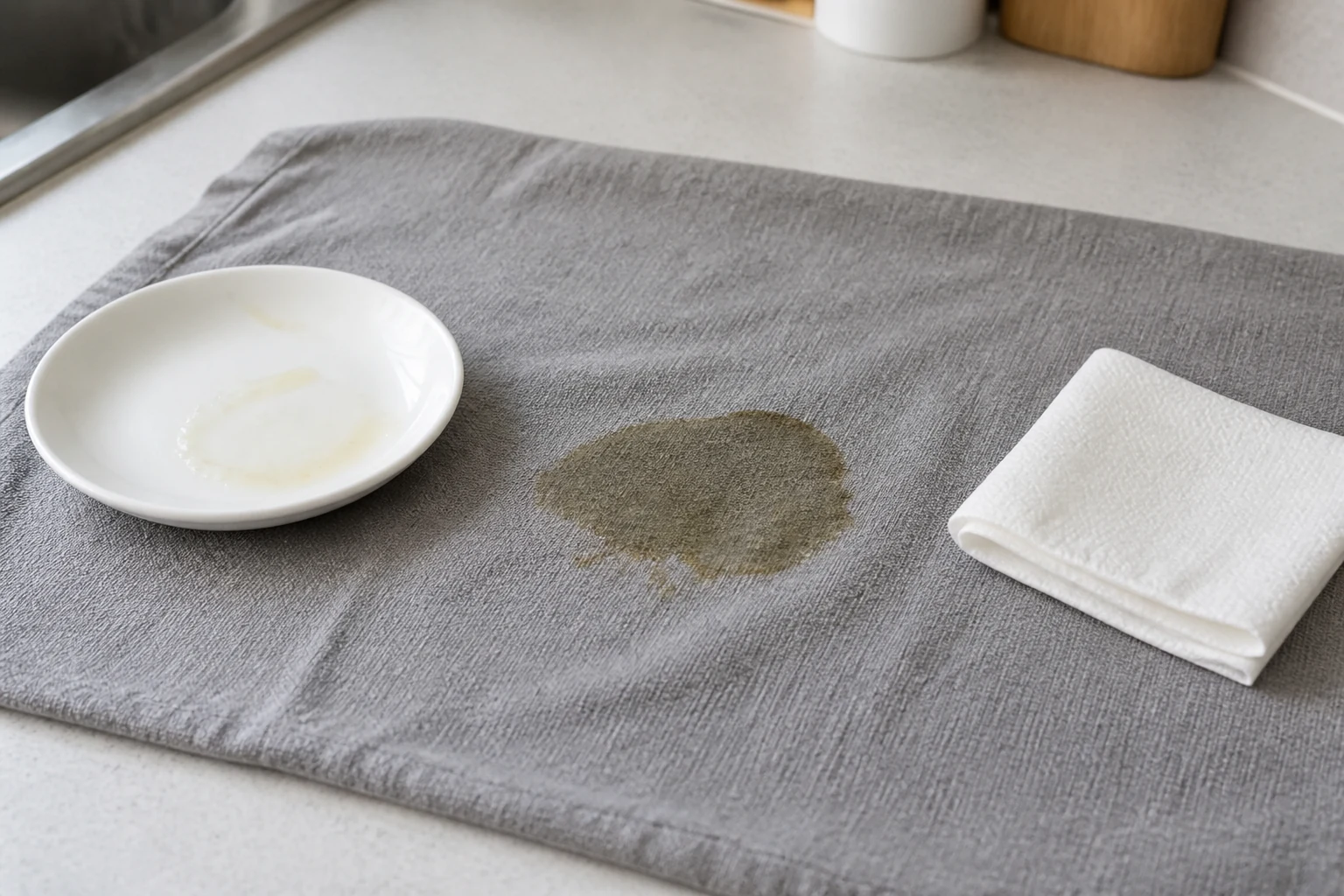
If it has just happened, whatever it is on
Let hot grease become safe to handle, lift food solids and blot straight down with plain white absorbent material. Use a compatible absorbent powder on porous material. Do not rub, heat, improvise with strong degreaser or wash oil into drainage.
Do not do this
Do not touch hot grease, rub the spill outward, tumble dry or iron a marked textile, use oven cleaner or solvent on an unidentified material, mix cleaning chemicals, scrub a delicate finish or rinse grease into a drain.
Cooking grease on specific materials
- Acrylic bath Lift and blot cooking grease from Acrylic Bath, then use a small amount of diluted washing-up liquid only if...
- Acrylic fabric Lift and blot cooking grease from Acrylic Fabric, absorb the oil, pretreat both sides with washing-up liquid...
- Acrylic sheet Lift and blot cooking grease from Acrylic Sheet, then use a small amount of diluted washing-up liquid only if...
- Aluminium Lift and blot cooking grease from Aluminium, then use a small amount of diluted washing-up liquid only if the...
- Aniline leather Blot cooking grease from Aniline Leather and identify the leather. Use a tested leather degreaser only on a c...
- Apron Lift and blot cooking grease from Apron, absorb the oil, pretreat both sides with washing-up liquid for 10 mi...
- Artificial grass Lift and blot cooking grease from Artificial Grass, then use a small amount of diluted washing-up liquid only...
- Bamboo flooring Lift and blot cooking grease from Bamboo Flooring, then use a small amount of diluted washing-up liquid only...
- Bare plaster Lift and absorb cooking grease from Bare Plaster without adding liquid. Water or solvent can enlarge the dama...
- Baseball cap Lift and blot cooking grease from Baseball Cap, absorb the oil, pretreat both sides with washing-up liquid fo...
- Bed sheets Lift and blot cooking grease from Bed Sheets, absorb the oil, pretreat both sides with washing-up liquid for...
- Blanket Lift and blot cooking grease from Blanket, absorb the oil, pretreat both sides with washing-up liquid for 10...
- Block paving Contain cooking grease on Block Paving, lift and absorb it before a small cool detergent wash, keep run-off o...
- Book pages Lift and absorb cooking grease from Book Pages without adding liquid. Water or solvent can enlarge the damage...
- Brass Lift and blot cooking grease from Brass, then use a small amount of diluted washing-up liquid only if the mat...
- Brick Contain cooking grease on Brick, lift and absorb it before a small cool detergent wash, keep run-off out of d...
- Brushed steel Lift and blot cooking grease from Brushed Steel, then use a small amount of diluted washing-up liquid only if...
- Butcher block worktop Lift and absorb cooking grease from Butcher Block Worktop without adding liquid. Water or solvent can enlarge...
- Canvas Lift and blot cooking grease from Canvas, absorb the oil, pretreat both sides with washing-up liquid for 10 m...
- Canvas print Lift and absorb cooking grease from Canvas Print without adding liquid. Water or solvent can enlarge the dama...
- Car boot liner Lift and blot cooking grease from Car Boot Liner, then use a small amount of diluted washing-up liquid only i...
- Car carpet Lift and blot cooking grease from Car Carpet, then use a small amount of diluted washing-up liquid only if th...
- Car headliner Lift and blot cooking grease from Car Headliner, then use a small amount of diluted washing-up liquid only if...
- Card Lift and absorb cooking grease from Card without adding liquid. Water or solvent can enlarge the damage, so r...
- Cardboard Lift and absorb cooking grease from Cardboard without adding liquid. Water or solvent can enlarge the damage,...
- Carpet tiles Lift and blot cooking grease from Carpet Tiles, then use a small amount of diluted washing-up liquid only if...
- Cashmere Lift and blot cooking grease from Cashmere, then use a small amount of diluted washing-up liquid only if the...
- Cast iron Let Cast Iron cool safely, wipe out the grease, hand wash briefly with mild washing-up liquid and dry complet...
- Ceramic basin Lift and blot cooking grease from Ceramic Basin, then use a small amount of diluted washing-up liquid only if...
- Ceramic sink Lift and blot cooking grease from Ceramic Sink, then use a small amount of diluted washing-up liquid only if...
- Ceramic tile Lift and blot cooking grease from Ceramic Tile, then use a small amount of diluted washing-up liquid only if...
- Chenille Lift and blot cooking grease from Chenille, then use a small amount of diluted washing-up liquid only if the...
- Chiffon Lift and blot cooking grease from Chiffon, then use a small amount of diluted washing-up liquid only if the m...
- Chopping board Lift and blot cooking grease from Chopping Board, then use a small amount of diluted washing-up liquid only i...
- Chrome Lift and blot cooking grease from Chrome, then use a small amount of diluted washing-up liquid only if the ma...
- Composite sink Lift and blot cooking grease from Composite Sink, then use a small amount of diluted washing-up liquid only i...
- Concrete Blot cooking grease from Concrete, absorb surface oil, wash gently with mild detergent and judge when dry. A...
- Copper Lift and blot cooking grease from Copper, then use a small amount of diluted washing-up liquid only if the ma...
- Corduroy Lift and blot cooking grease from Corduroy, absorb the oil, pretreat both sides with washing-up liquid for 10...
- Cork flooring Lift and blot cooking grease from Cork Flooring, then use a small amount of diluted washing-up liquid only if...
- Cotton Lift and blot cooking grease from Cotton, absorb the oil, pretreat both sides with washing-up liquid for 10 m...
- Curtains Lift and blot cooking grease from Curtains, absorb the oil, pretreat both sides with washing-up liquid for 10...
- Cushion cover Lift and blot cooking grease from Cushion Cover, absorb the oil, pretreat both sides with washing-up liquid f...
- Dashboard plastic Lift and blot cooking grease from Dashboard Plastic, then use a small amount of diluted washing-up liquid onl...
- Denim Lift and blot cooking grease from Denim, absorb the oil, pretreat both sides with washing-up liquid for 10 mi...
- Dining chair fabric Lift and blot cooking grease from Dining Chair Fabric, then use a small amount of diluted washing-up liquid o...
- Doormat Lift and blot cooking grease from Doormat, then use a small amount of diluted washing-up liquid only if the m...
- Down filled jacket Lift and blot cooking grease from Down Filled Jacket, then use a small amount of diluted washing-up liquid on...
- Duvet cover Lift and blot cooking grease from Duvet Cover, absorb the oil, pretreat both sides with washing-up liquid for...
- Elastane Lift and blot cooking grease from Elastane, absorb the oil, pretreat both sides with washing-up liquid for 10...
- Enamel Lift and blot cooking grease from Enamel, then use a small amount of diluted washing-up liquid only if the ma...
- Enamel bath Lift and blot cooking grease from Enamel Bath, then use a small amount of diluted washing-up liquid only if t...
- Engineered wood Lift and blot cooking grease from Engineered Wood, then use a small amount of diluted washing-up liquid only...
- Extractor hood Switch off and let Extractor Hood cool, lift thick grease, then wipe with diluted washing-up liquid using lit...
- Fabric blind Lift and blot cooking grease from Fabric Blind, absorb the oil, pretreat both sides with washing-up liquid fo...
- Fabric car seat Lift and blot cooking grease from Fabric Car Seat, then use a small amount of diluted washing-up liquid only...
- Fabric sofa Lift and blot cooking grease from Fabric Sofa, then use a small amount of diluted washing-up liquid only if t...
- Faux fur Lift and blot cooking grease from Faux Fur, then use a small amount of diluted washing-up liquid only if the...
- Faux leather Lift and blot cooking grease from Faux Leather, then use a small amount of diluted washing-up liquid only if...
- Fence panel Lift and blot cooking grease from Fence Panel, then use a small amount of diluted washing-up liquid only if t...
- Finished leather Blot cooking grease from Finished Leather and identify the leather. Use a tested leather degreaser only on a...
- Fleece Lift and blot cooking grease from Fleece, absorb the oil, pretreat both sides with washing-up liquid for 10 m...
- Foam Lift and blot cooking grease from Foam, then use a small amount of diluted washing-up liquid only if the mate...
- Footstool Lift and blot cooking grease from Footstool, then use a small amount of diluted washing-up liquid only if the...
- Galvanised steel Lift and blot cooking grease from Galvanised Steel, then use a small amount of diluted washing-up liquid only...
- Garden shed Lift and blot cooking grease from Garden Shed, then use a small amount of diluted washing-up liquid only if t...
- Glass Lift and blot cooking grease from Glass, then use a small amount of diluted washing-up liquid only if the mat...
- Glass ceramic hob Switch off and let Glass Ceramic Hob cool, lift thick grease, then wipe with diluted washing-up liquid using...
- Gloss painted woodwork Lift and blot cooking grease from Gloss Painted Woodwork, then use a small amount of diluted washing-up liqui...
- Granite Blot cooking grease from Granite, absorb surface oil, wash gently with mild detergent and judge when dry. A r...
- Grout Blot cooking grease from Grout, absorb surface oil, wash gently with mild detergent and judge when dry. A rem...
- Headboard Lift and blot cooking grease from Headboard, then use a small amount of diluted washing-up liquid only if the...
- Induction hob Switch off and let Induction Hob cool, lift thick grease, then wipe with diluted washing-up liquid using litt...
- Ironing board cover Lift and blot cooking grease from Ironing Board Cover, absorb the oil, pretreat both sides with washing-up li...
- Jersey Lift and blot cooking grease from Jersey, absorb the oil, pretreat both sides with washing-up liquid for 10 m...
- Jute rug Lift and absorb cooking grease from Jute Rug without adding liquid. Water or solvent can enlarge the damage,...
- Kettle Switch off and let Kettle cool, lift thick grease, then wipe with diluted washing-up liquid using little mois...
- Lace Lift and blot cooking grease from Lace, then use a small amount of diluted washing-up liquid only if the mate...
- Laminate flooring Lift and blot cooking grease from Laminate Flooring, then use a small amount of diluted washing-up liquid onl...
- Laminate worktop Lift and blot cooking grease from Laminate Worktop, then use a small amount of diluted washing-up liquid only...
- Lampshade Lift and absorb cooking grease from Lampshade without adding liquid. Water or solvent can enlarge the damage,...
- Leather bag Blot cooking grease from Leather Bag and identify the leather. Use a tested leather degreaser only on a compa...
- Leather car seat Blot cooking grease from Leather Car Seat and identify the leather. Use a tested leather degreaser only on a...
- Leather jacket Blot cooking grease from Leather Jacket and identify the leather. Use a tested leather degreaser only on a co...
- Leather shoes Blot cooking grease from Leather Shoes and identify the leather. Use a tested leather degreaser only on a com...
- Leather sofa Blot cooking grease from Leather Sofa and identify the leather. Use a tested leather degreaser only on a comp...
- Limestone Blot cooking grease from Limestone, absorb surface oil, wash gently with mild detergent and judge when dry. A...
- Linen Lift and blot cooking grease from Linen, absorb the oil, pretreat both sides with washing-up liquid for 10 mi...
- Linen sofa Lift and blot cooking grease from Linen Sofa, then use a small amount of diluted washing-up liquid only if th...
- Linoleum Lift and blot cooking grease from Linoleum, then use a small amount of diluted washing-up liquid only if the...
- Luxury vinyl tile Lift and blot cooking grease from Luxury Vinyl Tile, then use a small amount of diluted washing-up liquid onl...
- Marble Blot cooking grease from Marble, absorb surface oil, wash gently with mild detergent and judge when dry. A re...
- Matt emulsion Lift and absorb cooking grease from Matt Emulsion without adding liquid. Water or solvent can enlarge the dam...
- Mattress Lift and blot cooking grease from Mattress, then use a small amount of diluted washing-up liquid only if the...
- Mattress topper Lift and blot cooking grease from Mattress Topper, then use a small amount of diluted washing-up liquid only...
- MDF Lift and absorb cooking grease from Mdf without adding liquid. Water or solvent can enlarge the damage, so re...
- Melamine Lift and blot cooking grease from Melamine, then use a small amount of diluted washing-up liquid only if the...
- Merino wool Lift and blot cooking grease from Merino Wool, then use a small amount of diluted washing-up liquid only if t...
- Metal garden furniture Lift and blot cooking grease from Metal Garden Furniture, then use a small amount of diluted washing-up liqui...
- Microfibre sofa Lift and blot cooking grease from Microfibre Sofa, then use a small amount of diluted washing-up liquid only...
Cooking grease can be liquid oil, softened animal fat, butter or an oily mixture carrying food pigment. The mobile oil spreads first. As residue ages, exposure to air and previous cooking heat can oxidise and cross-link it into a darker, tackier film that needs more controlled treatment.
The first minute
Protect against burns first. Once the item is safe to handle, lift solids and blot straight down with plain white absorbent material. Wiping is the main avoidable mistake because it turns a small concentrated spill into a wider film.
Absorb before adding water
A surfactant such as diluted washing-up liquid can help surround oily residue only after free grease has been removed. On porous stone, leather, carpet, paper and unfinished wood, too much liquid can spread the oil or damage the material before it cleans anything.
Separate the stains
Gravy, curry, tomato sauce and meat juices can leave pigment, tannin or protein after the grease is gone. Judge only when fully dry and identify the remaining mark before escalating.
How cooking grease behaves
Cooking oils and fats are mainly triglycerides. Liquid oil spreads into pores and fibres, while cooling fats can congeal and heated residues can oxidise and cross-link into a darker, tougher film. Sauces and meat juices may also leave pigment or protein after the oily part has gone.
Sources
What we checked and when. Where a manufacturer instruction disagrees with anything here, follow the manufacturer.
-
Michigan State University chemistry of fats and oils
authority
University chemistry reference establishing that cooking fats and oils are triglycerides, with fats generally solid or semisolid and oils liquid at room temperature.
Checked 2 September 2026
-
American Cleaning Institute grease and oil stain guidance
trade body
Cleaning trade body guidance to pretreat grease and oil with a prewash product or liquid laundry detergent, launder at a fabric-safe temperature and repeat before using a tumble dryer if the mark remains.
Checked 2 September 2026
-
Iowa State University Extension food grease guidance
authority
University extension guidance identifying gravy, butter, salad dressing and meat juices as oil-based stains, with prompt scraping or absorption, a ten minute liquid dish-soap pretreatment and material-safe laundering.
Checked 2 September 2026
-
Journal of Surfactants and Detergents study of kitchen oil grime
publication
Peer-reviewed research establishing that heated cooking oil on kitchen appliances oxidises and cross-links into a more insoluble greasy film, explaining why aged deposits are harder to remove.
Checked 2 September 2026
-
Dr. Beckmann Stain Devils Fat and Sauces
manufacturer
Manufacturer directions identify cooking fat, oil and grease, specify a surfactant and enzyme formula with a 10 to 15 minute contact time, require a hidden colour test and exclude leather, suede, acetate, rayon, carpet and upholstery.
Checked 2 September 2026