Stain
Tomato sauce stains
A combination food stain containing red tomato pigment and often oil. Lift bulk sauce, start cool, treat pigment and oil without rubbing, and keep heat away until the mark has gone.
- TypeCombination
- Heat sets itYes
- Reviewed2 September 2026
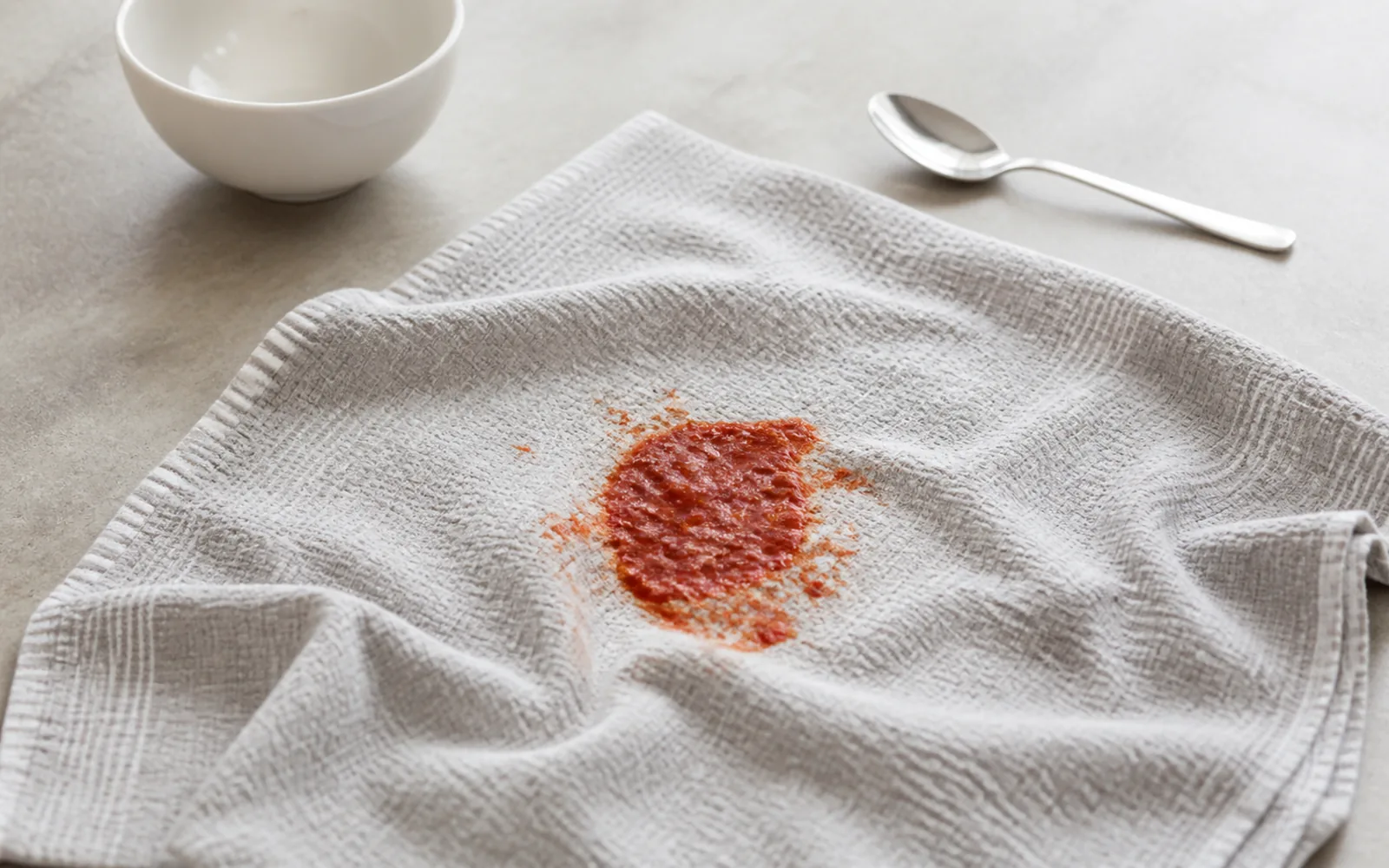
If it has just happened, whatever it is on
Lift tomato sauce, blot straight down and flush a safely washable fabric from the reverse with cool water. Keep heat, rubbing, strong chemicals and uncontrolled soaking away until the material and remaining stain are identified.
Do not do this
Do not rub outwards, use a hot wash, tumble dry, iron or steam while a mark remains, use vinegar on calcium-based stone, bleach an unidentified dyed material, soak paper or leather, or mix cleaning chemicals.
Tomato sauce on specific materials
- Acrylic bath Lift tomato sauce from Acrylic Bath, then wipe or blot inwards with a tested cool detergent solution. Remove...
- Acrylic fabric Lift tomato sauce from Acrylic Fabric, flush from the reverse with cool water, pretreat the remaining film, w...
- Acrylic sheet Lift tomato sauce from Acrylic Sheet, then wipe or blot inwards with a tested cool detergent solution. Remove...
- Aniline leather Lift dry and wet tomato residue from Aniline Leather without rubbing or adding liquid. Blot gently, then refe...
- Apron Lift tomato sauce from Apron, flush from the reverse with cool water, pretreat the remaining film, wash to th...
- Artificial grass Lift tomato sauce from Artificial Grass, then wipe or blot inwards with a tested cool detergent solution. Rem...
- Bamboo flooring Lift tomato sauce from Bamboo Flooring, then wipe or blot inwards with a tested cool detergent solution. Remo...
- Bare plaster Lift dry and wet tomato residue from Bare Plaster without rubbing or adding liquid. Blot gently, then refer a...
- Baseball cap Lift tomato sauce from Baseball Cap, flush from the reverse with cool water, pretreat the remaining film, was...
- Bed sheets Lift tomato sauce from Bed Sheets, flush from the reverse with cool water, pretreat the remaining film, wash...
- Blanket Lift tomato sauce from Blanket, flush from the reverse with cool water, pretreat the remaining film, wash to...
- Block paving Lift tomato sauce from Block Paving, then wipe or blot inwards with a tested cool detergent solution. Remove...
- Book pages Lift dry and wet tomato residue from Book Pages without rubbing or adding liquid. Blot gently, then refer any...
- Brick Lift tomato sauce from Brick, then wipe or blot inwards with a tested cool detergent solution. Remove residue...
- Butcher block worktop Lift dry and wet tomato residue from Butcher Block Worktop without rubbing or adding liquid. Blot gently, the...
- Canvas Lift tomato sauce from Canvas, flush from the reverse with cool water, pretreat the remaining film, wash to t...
- Canvas print Lift dry and wet tomato residue from Canvas Print without rubbing or adding liquid. Blot gently, then refer a...
- Car boot liner Lift tomato sauce from Car Boot Liner, blot from the edge with a tested cool detergent solution, remove resid...
- Car carpet Lift tomato sauce from Car Carpet, blot from the edge with a tested cool detergent solution, remove residue w...
- Car headliner Lift tomato sauce from Car Headliner, blot from the edge with a tested cool detergent solution, remove residu...
- Card Lift dry and wet tomato residue from Card without rubbing or adding liquid. Blot gently, then refer any visib...
- Cardboard Lift dry and wet tomato residue from Cardboard without rubbing or adding liquid. Blot gently, then refer any...
- Carpet tiles Lift tomato sauce from Carpet Tiles, blot from the edge with a tested cool detergent solution, remove residue...
- Cashmere Lift tomato sauce from Cashmere, then wipe or blot inwards with a tested cool detergent solution. Remove resi...
- Ceramic basin Lift tomato sauce from Ceramic Basin, then wipe or blot inwards with a tested cool detergent solution. Remove...
- Ceramic sink Lift tomato sauce from Ceramic Sink, then wipe or blot inwards with a tested cool detergent solution. Remove...
- Ceramic tile Lift tomato sauce from Ceramic Tile, then wipe or blot inwards with a tested cool detergent solution. Remove...
- Chenille Lift tomato sauce from Chenille, blot from the edge with a tested cool detergent solution, remove residue wit...
- Chiffon Lift tomato sauce from Chiffon, then wipe or blot inwards with a tested cool detergent solution. Remove resid...
- Chopping board Lift tomato sauce from Chopping Board, then wipe or blot inwards with a tested cool detergent solution. Remov...
- Composite sink Lift tomato sauce from Composite Sink, then wipe or blot inwards with a tested cool detergent solution. Remov...
- Concrete Lift tomato sauce from Concrete, then wipe or blot inwards with a tested cool detergent solution. Remove resi...
- Corduroy Lift tomato sauce from Corduroy, flush from the reverse with cool water, pretreat the remaining film, wash to...
- Cork flooring Lift tomato sauce from Cork Flooring, then wipe or blot inwards with a tested cool detergent solution. Remove...
- Cotton Lift tomato sauce from Cotton, flush from the reverse with cool water, pretreat the remaining film, wash to t...
- Curtains Lift tomato sauce from Curtains, then wipe or blot inwards with a tested cool detergent solution. Remove resi...
- Cushion cover Lift tomato sauce from Cushion Cover, blot from the edge with a tested cool detergent solution, remove residu...
- Dashboard plastic Lift tomato sauce from Dashboard Plastic, then wipe or blot inwards with a tested cool detergent solution. Re...
- Denim Lift tomato sauce from Denim, flush from the reverse with cool water, pretreat the remaining film, wash to th...
- Dining chair fabric Lift tomato sauce from Dining Chair Fabric, blot from the edge with a tested cool detergent solution, remove...
- Doormat Lift tomato sauce from Doormat, blot from the edge with a tested cool detergent solution, remove residue with...
- Down filled jacket Lift tomato sauce from Down Filled Jacket, then wipe or blot inwards with a tested cool detergent solution. R...
- Duvet cover Lift tomato sauce from Duvet Cover, flush from the reverse with cool water, pretreat the remaining film, wash...
- Elastane Lift tomato sauce from Elastane, flush from the reverse with cool water, pretreat the remaining film, wash to...
- Enamel Lift tomato sauce from Enamel, then wipe or blot inwards with a tested cool detergent solution. Remove residu...
- Enamel bath Lift tomato sauce from Enamel Bath, then wipe or blot inwards with a tested cool detergent solution. Remove r...
- Engineered wood Lift tomato sauce from Engineered Wood, then wipe or blot inwards with a tested cool detergent solution. Remo...
- Fabric blind Lift tomato sauce from Fabric Blind, then wipe or blot inwards with a tested cool detergent solution. Remove...
- Fabric car seat Lift tomato sauce from Fabric Car Seat, blot from the edge with a tested cool detergent solution, remove resi...
- Fabric sofa Lift tomato sauce from Fabric Sofa, blot from the edge with a tested cool detergent solution, remove residue...
- Faux fur Lift tomato sauce from Faux Fur, then wipe or blot inwards with a tested cool detergent solution. Remove resi...
- Faux leather Lift tomato sauce from Faux Leather, then wipe or blot inwards with a tested cool detergent solution. Remove...
- Fence panel Lift tomato sauce from Fence Panel, then wipe or blot inwards with a tested cool detergent solution. Remove r...
- Finished leather Blot tomato sauce from Finished Leather, confirm that it is finished leather, then use a tested leather clean...
- Fleece Lift tomato sauce from Fleece, flush from the reverse with cool water, pretreat the remaining film, wash to t...
- Foam Lift tomato sauce from Foam, then wipe or blot inwards with a tested cool detergent solution. Remove residue,...
- Footstool Lift tomato sauce from Footstool, blot from the edge with a tested cool detergent solution, remove residue wi...
- Glass Lift tomato sauce from Glass, then wipe or blot inwards with a tested cool detergent solution. Remove residue...
- Glass ceramic hob Lift tomato sauce from Glass Ceramic Hob, then wipe or blot inwards with a tested cool detergent solution. Re...
- Gloss painted woodwork Lift tomato sauce from Gloss Painted Woodwork, then wipe or blot inwards with a tested cool detergent solutio...
- Granite Lift tomato sauce from Granite, then wipe or blot inwards with a tested cool detergent solution. Remove resid...
- Grout Lift tomato sauce from Grout, then wipe or blot inwards with a tested cool detergent solution. Remove residue...
- Headboard Lift tomato sauce from Headboard, blot from the edge with a tested cool detergent solution, remove residue wi...
- Induction hob Lift tomato sauce from Induction Hob, then wipe or blot inwards with a tested cool detergent solution. Remove...
- Ironing board cover Lift tomato sauce from Ironing Board Cover, flush from the reverse with cool water, pretreat the remaining fi...
- Jersey Lift tomato sauce from Jersey, flush from the reverse with cool water, pretreat the remaining film, wash to t...
- Jute rug Lift dry and wet tomato residue from Jute Rug without rubbing or adding liquid. Blot gently, then refer any v...
- Lace Lift tomato sauce from Lace, then wipe or blot inwards with a tested cool detergent solution. Remove residue,...
- Laminate flooring Lift tomato sauce from Laminate Flooring, then wipe or blot inwards with a tested cool detergent solution. Re...
- Laminate worktop Lift tomato sauce from Laminate Worktop, then wipe or blot inwards with a tested cool detergent solution. Rem...
- Lampshade Lift dry and wet tomato residue from Lampshade without rubbing or adding liquid. Blot gently, then refer any...
- Leather bag Blot tomato sauce from Leather Bag, confirm that it is finished leather, then use a tested leather cleaner li...
- Leather car seat Blot tomato sauce from Leather Car Seat, confirm that it is finished leather, then use a tested leather clean...
- Leather jacket Blot tomato sauce from Leather Jacket, confirm that it is finished leather, then use a tested leather cleaner...
- Leather shoes Blot tomato sauce from Leather Shoes, confirm that it is finished leather, then use a tested leather cleaner...
- Leather sofa Blot tomato sauce from Leather Sofa, confirm that it is finished leather, then use a tested leather cleaner l...
- Limestone Lift tomato sauce from Limestone, then wipe or blot inwards with a tested cool detergent solution. Remove res...
- Linen Lift tomato sauce from Linen, flush from the reverse with cool water, pretreat the remaining film, wash to th...
- Linen sofa Lift tomato sauce from Linen Sofa, blot from the edge with a tested cool detergent solution, remove residue w...
- Linoleum Lift tomato sauce from Linoleum, then wipe or blot inwards with a tested cool detergent solution. Remove resi...
- Luxury vinyl tile Lift tomato sauce from Luxury Vinyl Tile, then wipe or blot inwards with a tested cool detergent solution. Re...
- Marble Lift tomato sauce from Marble, then wipe or blot inwards with a tested cool detergent solution. Remove residu...
- Matt emulsion Lift dry and wet tomato residue from Matt Emulsion without rubbing or adding liquid. Blot gently, then refer...
- Mattress Lift tomato sauce from Mattress, blot from the edge with a tested cool detergent solution, remove residue wit...
- Mattress topper Lift tomato sauce from Mattress Topper, blot from the edge with a tested cool detergent solution, remove resi...
- MDF Lift dry and wet tomato residue from Mdf without rubbing or adding liquid. Blot gently, then refer any visibl...
- Melamine Lift tomato sauce from Melamine, then wipe or blot inwards with a tested cool detergent solution. Remove resi...
- Merino wool Lift tomato sauce from Merino Wool, then wipe or blot inwards with a tested cool detergent solution. Remove r...
- Microfibre sofa Lift tomato sauce from Microfibre Sofa, blot from the edge with a tested cool detergent solution, remove resi...
- Microwave interior Lift tomato sauce from Microwave Interior, then wipe or blot inwards with a tested cool detergent solution. R...
- Mosaic tile Lift tomato sauce from Mosaic Tile, then wipe or blot inwards with a tested cool detergent solution. Remove r...
- Nubuck Lift dry and wet tomato residue from Nubuck without rubbing or adding liquid. Blot gently, then refer any vis...
- Nylon Lift tomato sauce from Nylon, flush from the reverse with cool water, pretreat the remaining film, wash to th...
- Nylon carpet Lift tomato sauce from Nylon Carpet, blot from the edge with a tested cool detergent solution, remove residue...
- Office chair Lift tomato sauce from Office Chair, blot from the edge with a tested cool detergent solution, remove residue...
- Oiled wood Lift tomato sauce from Oiled Wood, then wipe or blot inwards with a tested cool detergent solution. Remove re...
- Oven glass Lift tomato sauce from Oven Glass, then wipe or blot inwards with a tested cool detergent solution. Remove re...
- Oven interior Lift tomato sauce from Oven Interior, then wipe or blot inwards with a tested cool detergent solution. Remove...
- Painted wood Lift tomato sauce from Painted Wood, then wipe or blot inwards with a tested cool detergent solution. Remove...
- Paper Lift dry and wet tomato residue from Paper without rubbing or adding liquid. Blot gently, then refer any visi...
Tomato sauce is not one simple stain. Tomato pigment creates the orange-red colour, soluble sauce ingredients spread with moisture, and pasta sauce or ketchup may also leave a separate oily film. Treating only one part can leave the other visible.
The first minute
Lift thick sauce with a blunt spoon. Blot straight down with a plain white cloth, changing sections as colour transfers. On washable fabric, flush cool water through the reverse so the sauce leaves by the route it entered.
Keep the first treatment cool
Laundry guidance starts with cold water and warns against dryer heat while the mark remains. Heat is also unsafe for many finishes, adhesives and delicate fibres, so every route in this batch begins cool.
Know when red is no longer a stain
After drying, a shadow may be tomato pigment, absorbed oil, dye loss, stone etching or a changed coating. One improving repeat is reasonable. No improvement, or any material change, is the point to stop.
How tomato sauce behaves
Tomato sauce combines red tomato pigment with water-soluble sauce ingredients and often cooking oil. The pigment spreads into fibres and pores, while oil can leave a separate translucent edge. Dryer heat can fix a remaining mark.
Sources
What we checked and when. Where a manufacturer instruction disagrees with anything here, follow the manufacturer.
-
American Cleaning Institute tomato sauce stain guide
trade body
Cleaning trade body guidance establishes prompt excess removal, cold flushing from the reverse of washable fabric, liquid detergent pretreatment, air-dry checking and repeat treatment before dryer heat.
Checked 2 September 2026
-
American Cleaning Institute pizza stain guidance
trade body
Cleaning trade body guidance distinguishes tomato sauce from cheese grease, starts tomato sauce with cold water, and warns that dryer heat can set a remaining mark.
Checked 2 September 2026
-
University of Georgia tomato and ketchup stain guidance
authority
University extension guidance states that tomato can stain permanently, requires immediate action and care-label checks, and gives separate fabric and carpet routes with colourfastness testing.
Checked 2 September 2026
-
Mississippi State University Extension stain removal guide
authority
University extension stain table starts catsup and tomato sauce with a cold-water rinse and cool-water detergent treatment, supporting a cool first response rather than heat.
Checked 2 September 2026
-
Dr. Beckmann Stain Devils Fat and Sauces
manufacturer
Manufacturer directions specifically name tomato ketchup, use a surfactant and enzyme formula for 10 to 15 minutes, require a hidden compatibility test, and exclude leather, suede, acetate, rayon, carpet and upholstery.
Checked 2 September 2026
-
Dr. Beckmann Upholstery Stain Remover
manufacturer
Manufacturer directions specifically name tomato sauce, give a three minute low-moisture upholstery route, require residue removal, and describe use on compatible sofas, car seats and mattresses.
Checked 2 September 2026